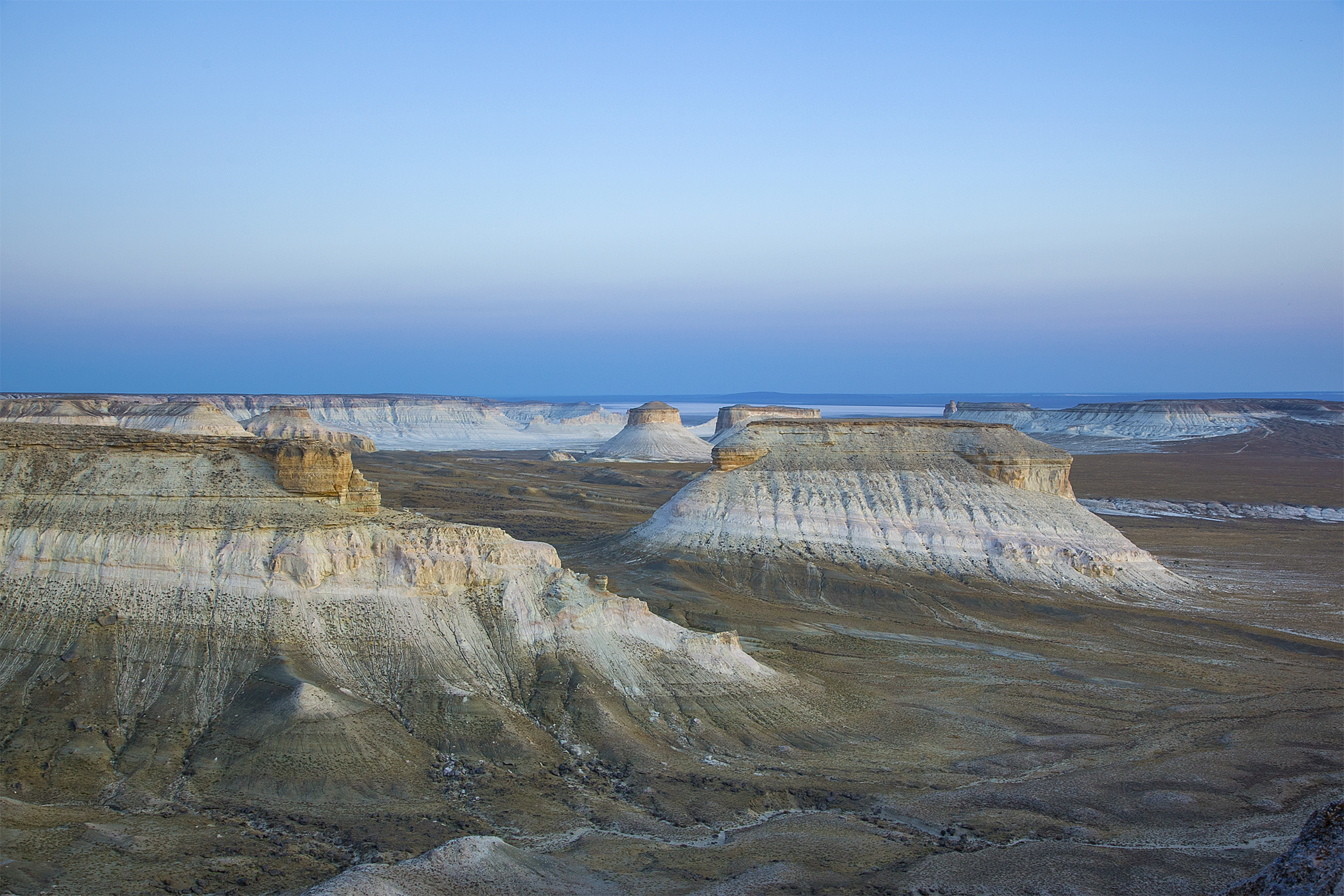
Nature Knows no Borders: Uzbekistan and Kazakhstan Commit to Jointly Protecting Wildlife of the Ustyurt Plateau
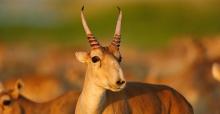
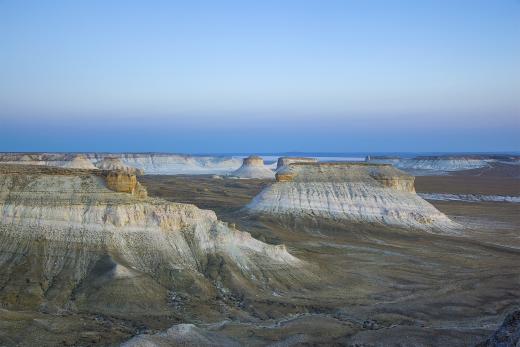
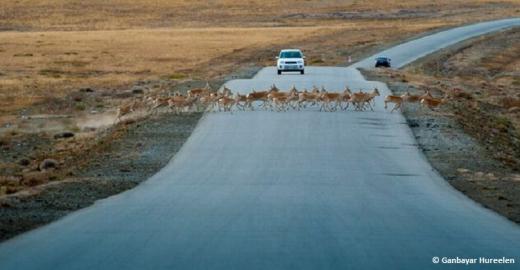
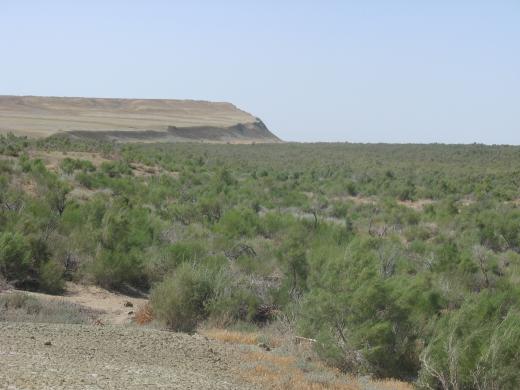
In the tri-border area between Kazakhstan, Uzbekistan, and Turkmenistan lies the Ustyurt Plateau, characterised by canyons and different types of deserts. It is one of the last places of refuge for various species of animals listed on the Appendices of the Convention on the Conservation of Migratory Species of Wild Animals (CMS), an environmental treaty of the United Nations. Some of these migratory species are endangered and endemic, and include Saiga Antelopes (Saiga tatarica), Urial (Ovis vignei), Goitered Gazelles (Gazella subgutturosa), Kulan (Equus hemionus), and Persian Leopards (Panthera pardus tulliana).
Recognizing the importance of this natural heritage, a CMS report has identified several transboundary hotspots of importance for conserving migratory mammals in Central Asia on the Ustyurt Plateau. In addition, the area is part of the flyway for hundreds of species of migratory birds, including flamingos, vultures, eagles, and waterfowl. More recently, the Cold Winter Deserts of Turan have been inscribed as a transboundary UNESCO World Heritage Site shared between Kazakhstan, Turkmenistan, and Uzbekistan, which includes protected areas on the Ustyurt Plateau. The German Government's International Climate Initiative funded the Michael Succow Foundation, a conservation NGO, to support this process as part of the "Central Asian Desert Initiative" project.
In May 2023, GIZ (Deutsche Gesellschaft für Internationale Zusammenarbeit GmbH, German Federal Enterprise for International Cooperation), in cooperation with MSF, joined forces to facilitate a series of trilateral technical workshops to discuss the prospects of transboundary conservation work on the Ustyurt. Ahead of the 14th meeting of the Conference of the Parties to CMS (COP14), the CMS Secretariat facilitated further communication with Kazkahstan, Uzbekistan, and Turkmenistan on formalizing the cooperation between these countries on the conservation of Ustyurt wildlife, resulting in an agreement to sign a Memorandum for Cooperation.
COP14, held in Samarkand, Uzbekistan, was the first meeting of the Parties to any UN convention to take place in the Central Asian region and a perfect occasion to announce new commitments and forms of cooperation. Opening the High-level Segment of COP14, the Minister of Ecology, Environmental Protection, and Climate Change of the Republic of Uzbekistan, H.E. Aziz Abdukhakimov, said: “It’s our firm belief that actions under CMS are crucial to achieve global commitments under the Kunming-Montreal Global Biodiversity Framework, including commitments to restore and establish ecological connectivity, networks of protected areas, and other effective conservation measures to halt man-driven extinctions, to ensure that any taking of wild species is sustainable, safe, and legal.”
In this spirit, several documents were signed to support the conservation of migratory species at the High-level Segment, including the Memorandum of Understanding on the Conservation of Migratory Birds of Prey in Africa and Eurasia (Raptors MOU), signed by Kazakhstan, Kyrgyzstan, and Uzbekistan, and the Memorandum for Cooperation on the Conservation of Wildlife on Plateau Ustyurt (Ustyurt Memorandum), signed by Kazakhstan and Uzbekistan. The Ustyurt Memorandum reinforces the commitment of both countries to protecting migratory wildlife, their habitat, and connectivity, and signals to the international community that the Ustyurt Plateau is one of their conservation priorities for the two countries. The Ministry of Foreign Affairs of Turkmenistan is also currently reviewing the Memorandum and considering options to support this effort.
Asiatic Wild Ass / Khulan
Asiatic Wild Ass / KhulanGoitered Or Black-Tailed Gazelle
Goitered Or Black-Tailed GazelleLeopard, Panther
Leopard, Panther