
Press releases
Please read more in our news sections

UN Wildlife Treaty Releases New Reports on Importance of Community-Led Conservation
Community-led conservation strategies can be instrumental for the successful conservation of migratory species according to two major reports released by the Convention on the Conservation of Migratory Species of Wild Animals (CMS), a global wildlife treaty of the United Nations. The report Community Participation and Livelihoods focuses on 10 key guiding principles for community-led conservation strategies, while the study Potential for Community-Based Wildlife Management in Central Asia presents real-world insights into how community-led initiatives can achieve biodiversity conservation and sustainable livelihoods.
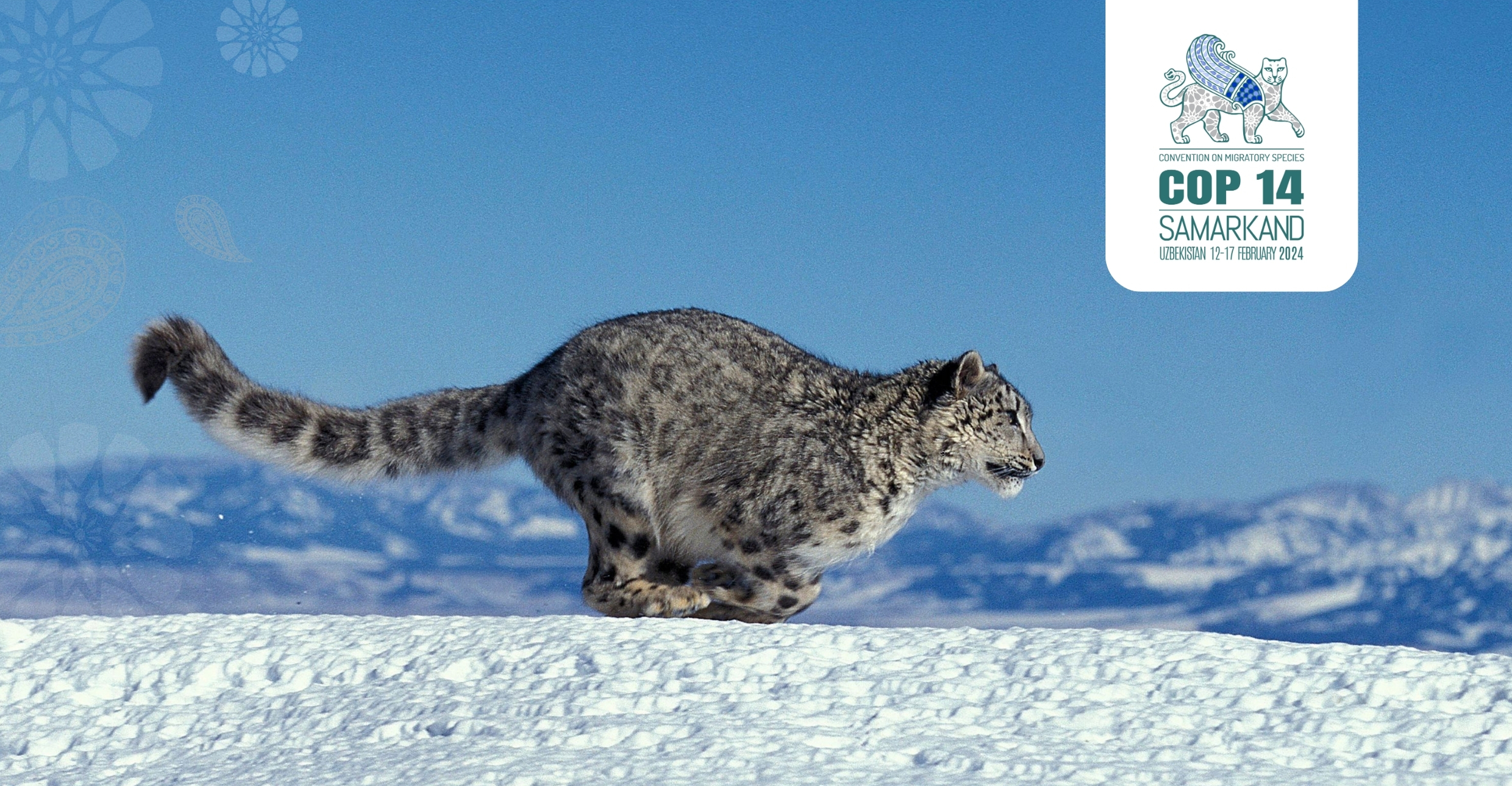
Историческая встреча ООН увенчалась утверждением масштабного списка действий, необходимых для сохранения мигрирующих видов диких животных
Самарканд, 17 февраля 2024 года - На 14-м заседании Конференции сторон (КС14) Конвенции по сохранению мигрирующих видов диких животных (КМВ), прошедшей в Самарканде (Узбекистан), был принят ряд новых решений по сохранению мигрирующих видовСреди согласованных мер: включение 14 видов в сферу действия Конвенции, в том числе евразийской рыси, манула и песчаной тигровой акулы. Были приняты и другие меры по охране таких видов, как шимпанзе и жираф.
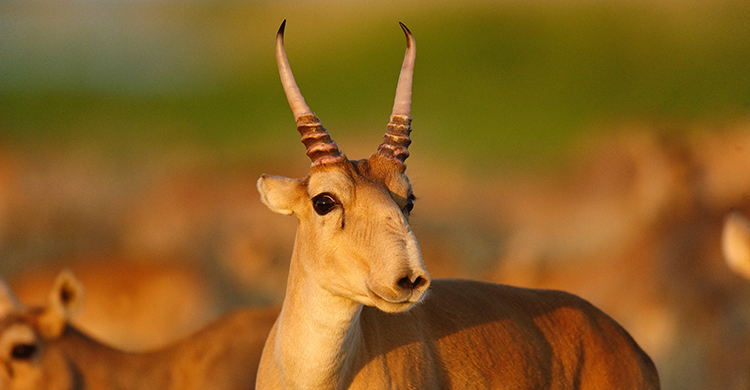
New International Conservation Actions Agreed for Saiga Antelopes
Kazakhstan, Mongolia, the Russian Federation, and Uzbekistan agreed on new joint conservation measures to conserve the Saiga Antelope under the United Nations’ Convention on the Conservation of Migratory Species of Wild Animals (CMS). For the next five years, the international Work Programme for the Saiga Antelope will provide a new framework to conserve and sustainably use the species throughout its migratory range.
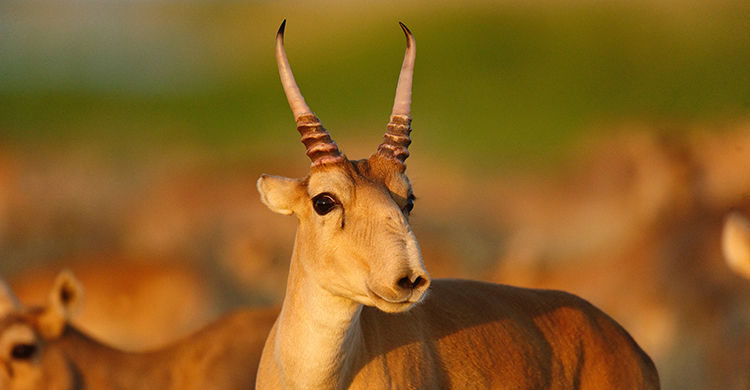
Согласованы новые международные меры по сохранению антилопы сайги
Казахстан, Монголия, Российская Федерация и Узбекистан согласовали новые совместные меры по сохранению сайгака в соответствии с Конвенцией Организации Объединенных Наций по сохранению мигрирующих видов диких животных (КМВ). В течение следующих пяти лет Среднесрочная Международная Рабочая Программа по сайгаку (2021 – 2025 г.) обеспечит новую основу для сохранения и устойчивого использования этого вида на всей территории его ареала.
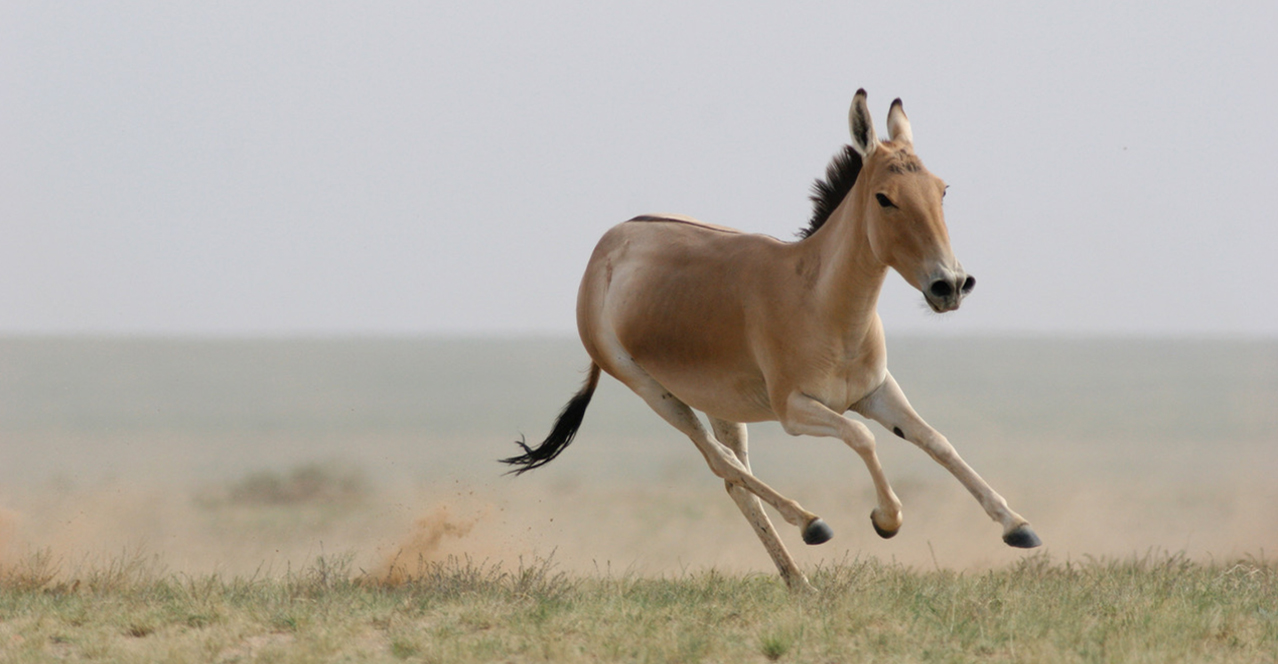
New Atlas Helps Remove Barriers to Animal Migration in Central Asia
The UN Convention on Migratory Species (CMS) has launched the Central Asian Mammals Migration and Linear Infrastructure Atlas to help ensure the survival of migratory wildlife in this important region. Featured in the Atlas are the Asiatic Cheetah, the Snow Leopard, as well as antelopes, deer, gazelles, wild horses and yaks which undertake long-distance journeys across the steppes, deserts and mountains of Central Asia to reach their feeding and breeding grounds.
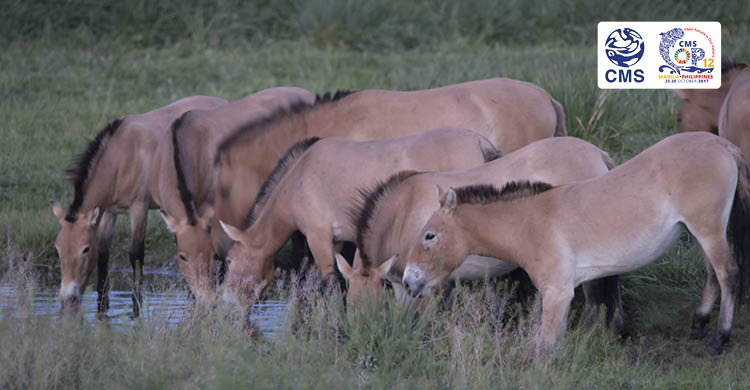
Two Rare Central Asian Mammals to be Given the Highest Protection under CMS
Dubbed the ‘Serengeti of the North,’ Central Asia stretches from the Caspian Sea in the west to China in the east and from Afghanistan in the south to Russia in the north. The vast deserts, semi‑deserts, grasslands and high mountains of Central Asia and adjacent regions, support some of the world’s last remaining large mammal migrations. Yet, unlike its African counterpart, it has been largely overlooked by conservation efforts.
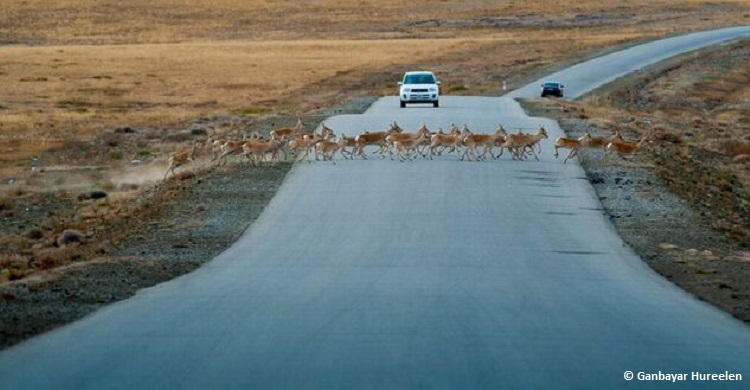
First Central Asian Migration Atlas Created to Reduce Harm to Wildlife from Infrastructure
Vilm, Germany (May 4, 2017)– Experts have for the first time mapped the distribution and movement corridors of migratory mammals in combination with threats from linear infrastructure, such as railways, roads, pipelines, and border fences, across the entire Central Asian region.
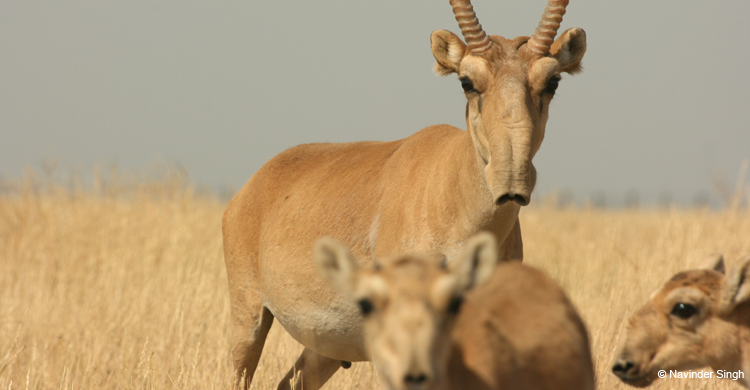
Signs of Hope for Saiga Antelope after Mass Die-off in 2015
In May 2015, a catastrophic and unprecedented mass die-off caused by a bacterial infection wiped out more than 200,000 saiga antelopes within a few weeks. The Betpak-Dala saiga population in central Kazakhstan lost almost 90 per cent of its animals, which is equivalent to over 60 per cent of the global population, leaving the species in a critical situation. A new census data shows an increase of saiga numbers in all three populations within Kazakhstan, the antelope’s main Range State.

Man-made Obstacles Cause Mongolian Gazelle Mass Die-off
More than 5,300 Mongolian gazelles died last winter along the Trans-Mongolian Railway in Mongolia. This was announced by a leading scientist of the Institute of Biology, Mongolian Academy of Sciences at the meeting of the Sessional Committee of the Scientific Council of the Convention on the Conservation of Migratory Species of Wild Animals (CMS), which opened on 18 April and concludes today in Bonn, Germany.
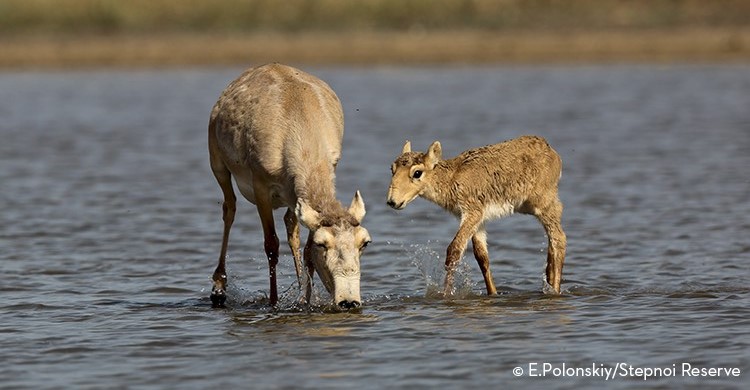
Countries Agree on Actions to Help Save Saiga Antelopes
Saiga Range Countries and Experts Convene in Tashkent Following Saiga Mass Mortality Event