Community-based Conservation Approach Yields First Photographic Evidence of a Snow Leopard in Kyrgyzstan’s Kara-Kujur Area
Author: Joshua Schlüter, NABU
Poaching remains a serious threat to snow leopards across their entire range. In Kyrgyzstan, extensive poaching during the 1990s severely impacted snow leopard populations in the country and prompted the implementation of measures to address poaching and illegal trade to protect this endangered species. These activities play a crucial role in combating both poaching and illegal wildlife trade, helping to protect snow leopards and their ecosystems. In 2021, NABU (Nature and Biodiversity Conservation Union) and the Kyrgyz NGO Ilbirs launched a project engaging local communities in conservation efforts to combat poaching and protect wildlife in specific regions of Kyrgyzstan.
This initiative established and supported two conservancies —Kara-Kujur and Kol-Ukok— leased and managed by local communities to implement targeted conservation strategies aimed at deterring poaching and preserving the local biodiversity. The Kara-Kujur area had shown no evidence of snow leopards, and populations of their main prey species were scarce.
The primary goal of this initiative was the implementation of the Spatial Monitoring and Reporting Tool (SMART) through a community-based approach, enhancing local engagement in anti-poaching activities. This strategy prioritized active involvement from the local communities, ensuring that anti-poaching efforts were both sustainable and widely supported. The first phase of the project focused on fostering dialogue among residents, pasture owners, hunters and other local stakeholders. This groundwork encouraged community members to actively participate in anti-poaching initiatives. Using preliminary data, a SMART model was customized to address the specific challenges of the Kara-Kujur area. Once finalized, SMART mobile devices were distributed to local participants, who expressed interest in contributing to conservation efforts. Workshops were held to provide training on the theoretical aspects of SMART, complemented by practical field applications. After the workshops, Ilbirs experts initially accompanied local community members in the field to ensure effective training in using the tool for practical, on-the-ground monitoring.
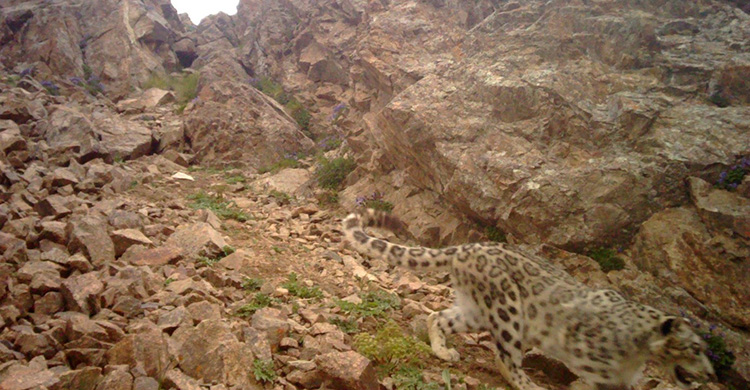
In addition to the implementation of SMART, camera traps were installed throughout the conservancy to monitor wildlife and track potential illegal activities. This integrated approach has shown early results: a snow leopard was recently captured on one of the camera traps in Kara-Kujur, marking the first photographic evidence of this CAMI species in the area. As a keystone and indicator species of high-altitude ecosystems in Central Asia, this sighting of a Snow Leopard highlights the effectiveness of community-based conservation efforts in protecting Kyrgyzstan’s wildlife.
To further strengthen the conservation efforts, actions plans were developed, laying out clear steps and objectives to maximize effectiveness. Additionally, information boards were strategically placed, educating the public about the legal consequences of poaching and serving as visual deterrents to potential offenders. These boards aim to raise awareness while reinforcing the importance of wildlife protection.
Snow Leopard
Snow LeopardSimilar Content

A New Project to Reduce Impacts of Climate Change on Local Communities and Wildlife in Central Asian Mountains