
New Maps Reveal Saiga Migrations and Threats Across Kazakhstan
View the CMS Atlas of Ungulate Migration
Text by CAMI Partners, main image by Albert Salemgareyev
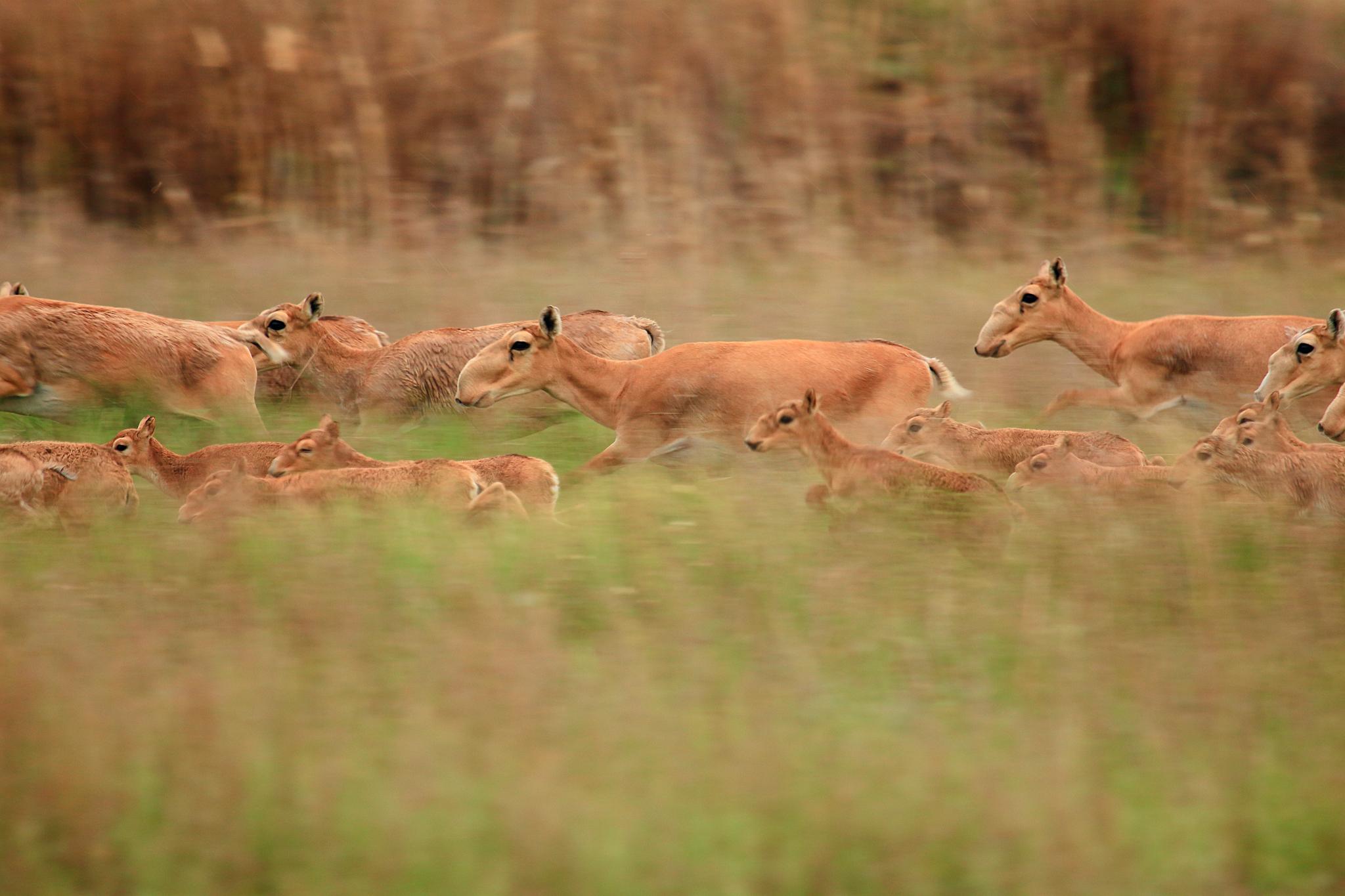
Bonn, 26 February 2026 - Herds of saiga antelope that teetered on the brink of extinction two decades ago now traverse the Kazakh Steppe in the millions, as reflected in a new set of migration maps published today. Thanks to conservation efforts, saiga numbers have surged and their massive migrations across Central Asia’s landscapes – some over 300 km long – have also returned.
The new migration maps illustrate three extensive migrations in the Kazakh Steppe, two in the Betpak Dala region of central Kazakhstan, and one in the eastern Ural region. The maps are published in the Atlas of Ungulate Migration, a growing compendium of maps for migratory ungulates. The online maps are publicly available for land-use planning, infrastructure development and conservation.
The Atlas is led by the Global Initiative on Ungulate Migration working under the auspices of the Convention on the Conservation of Migratory Species of Wild Animals, a United Nations treaty. The two saiga maps published today, along with a third map published in 2024, make the Atlas the world’s most up-to-date spatial data on saiga migrations in Kazakhstan.
Steffen Zuther, a conservation biologist with Frankfurt Zoological Society working for the Altyn Dala Conservation Initiative, says the maps underscore the vast habitats that saiga require to thrive in their unpredictable environment, and highlight the challenges the species still faces as rapid infrastructure development comes to the steppe.
“These maps are both a testament to what collaborative conservation efforts have achieved in the last 20 years, and the urgency to keep working to preserve freedom of movement needed for the survival of this iconic animal in the vast landscapes of Central Asia,” says Zuther, who has tracked and studied saiga for the last 19 years.
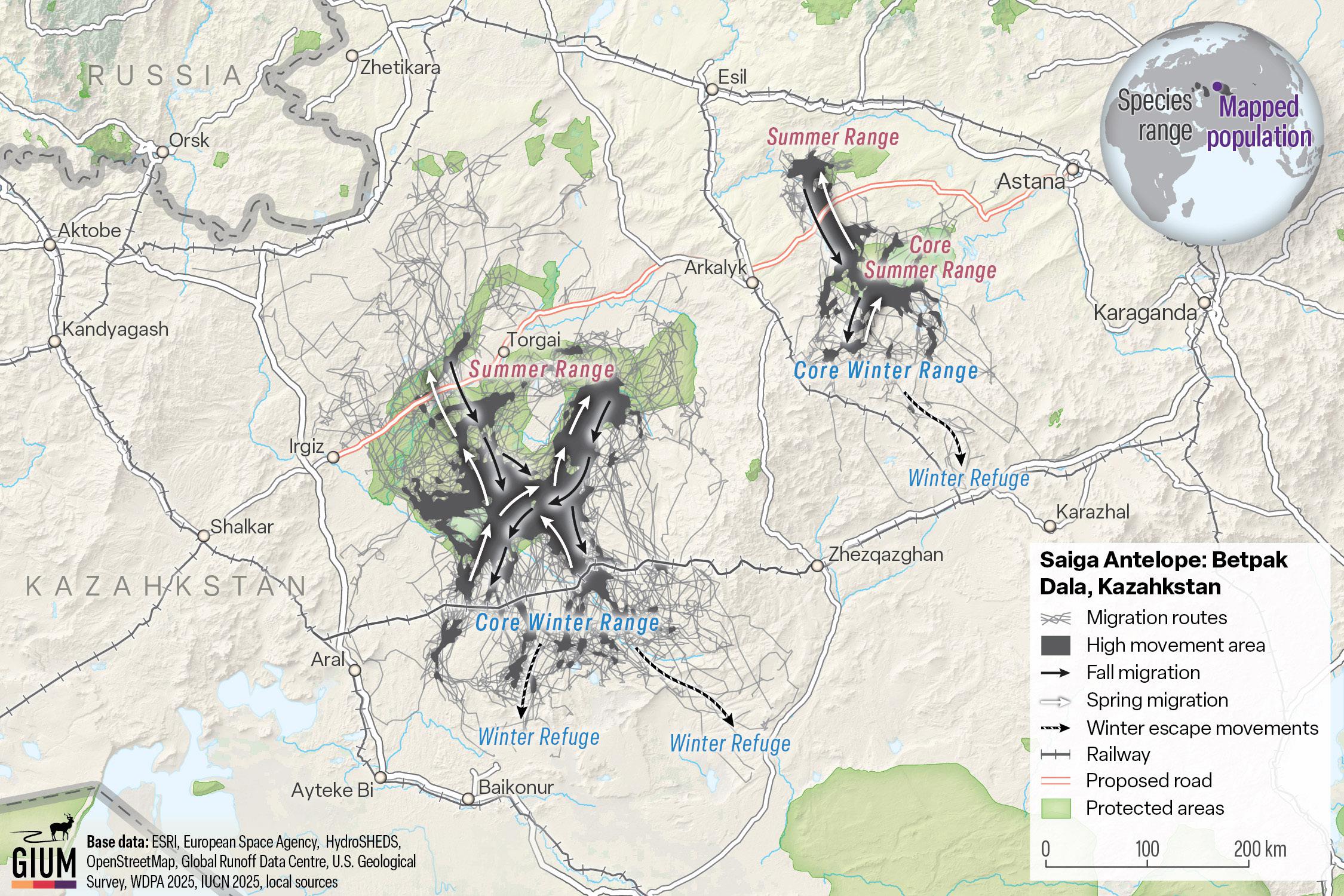
The saiga of central Kazakhstan, known as the Betpak Dala population, were once the most numerous in the world, with hundreds of thousands of animals traveling north every year to reach summer pastures, and then south as winter storms progressed.
Lapsed law enforcement and economic hardship after the breakup of the Soviet Union led to intensive poaching mainly for male saiga’s horns, causing the species to become critically endangered. From 1993-2003, Betpak Dala lost 95% of its saiga population. By the early 2000s, saiga in the steppe have become a rare occurrence.
Conservation efforts have successfully curbed illegal killing and restored the saiga across much of its former range. The few saiga that remained after the population crash likely preserved the cultural memory of migrations past, and today these migrations are still the longest globally for the species. In 2014, the government of Kazakhstan designated an ecological corridor based on tracking data from Betpak Dala saiga, protecting a critical movement area for the population. However, today the rapid growth of linear transportation infrastructure poses the greatest threat to saiga and the migrations they depend on to survive.
A major railroad, built in 2015, has cut off a large part of the Betpak Dala saiga’s former range, including critical winter habitat. Though some saiga still cross it, experts say it represents a significant barrier for most of the population. Additionally, a road running north to south has effectively isolated the eastern from the western saiga, creating two subpopulations.
A new road is planned to connect the towns of Astana and Irgiz, running through the Betpak Dala saiga’s summer pastures. This infrastructure will further fragment the saiga’s migratory range, but biologists believe that if built with wildlife in mind, some of the worst impacts could be avoided.
The dramatic effects of infrastructure have already impacted saiga elsewhere in the region. In 2015, the government built a new railway that bisected the Ustyurt saiga’s migratory range. After construction, saiga no longer access their winter refuge over the border in Uzbekistan, losing effectively 100 km of habitat.
“We are still learning about saiga behavior and what mitigation options are effective to allow them to cross railways, fences or roads,” says Zuther. “We also hope that having up-to-date maps will make it easier for development to avoid negative impacts and incorporate mitigation on the front end.”
The saiga of the Ural region experienced a similar population decline and recovery over the last several decades, and today their population is at its highest ever recorded. In recent years, their migrations have occasionally brought them over the border into Russia and into contact with local agriculture and livestock operations.
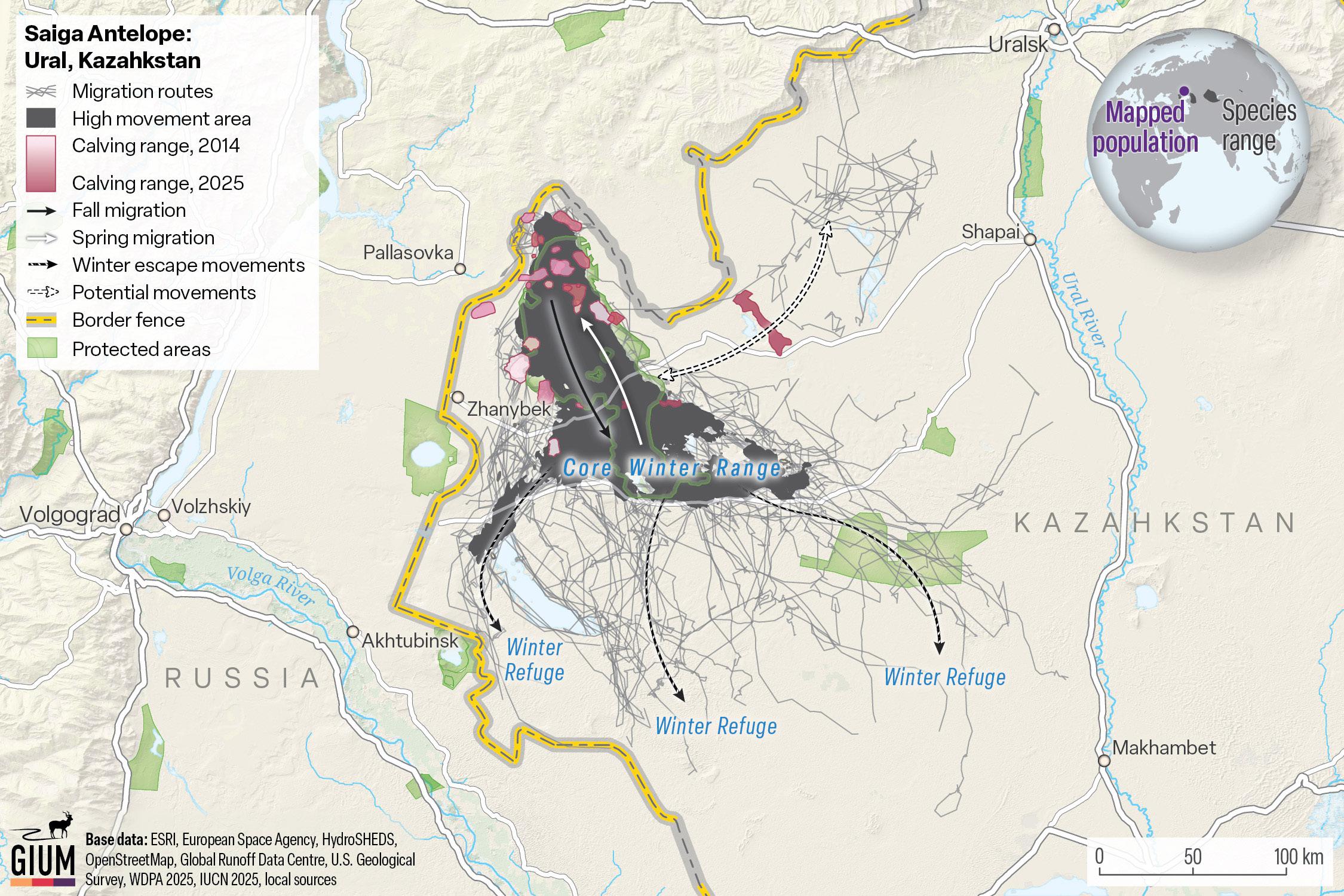
In response, the government of Kazakhstan initiated state-controlled hunting to limit population size in 2025. Conservation organizations like the Association for the Conservation of Biodiversity of Kazakhstan (ACBK) are working with the government to ensure the harvest is sustainable and to find solutions for conflicts between people and saiga.
The future of the saiga antelope in Kazakhstan is still being shaped. Maps like those published in the Atlas can support conservation efforts and aid planners when determining where to build new infrastructure or identify zones with a greater risk of conflict between saiga and agricultural operations.
- View the interactive maps on the CMS Atlas of Ungulate Migration
- Download the new fact sheets - Saiga Antelope: Betpak-Dala, Kazakhstan & Saiga Antelope: Ural, Kazakhstan