The USFWS Species Conservation Catalyst Fund to Support the Fight Against Trafficking of Saiga Products
Contributed article by Tatiana Hendrix, Program Officer, Combating Wildlife Trafficking, International Affairs, U.S. Fish and Wildlife Service (USFWS).
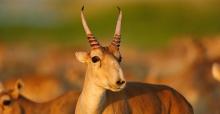
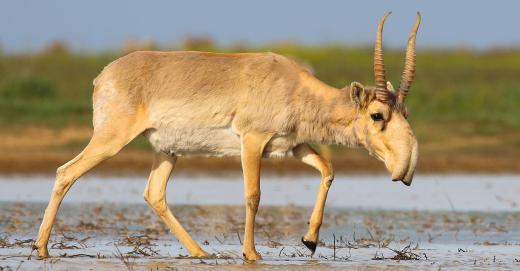
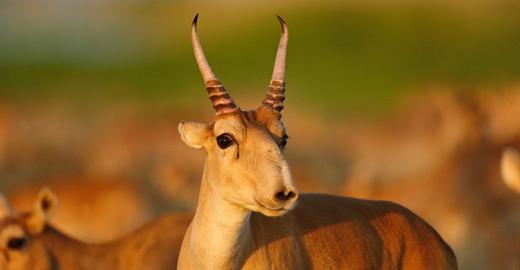
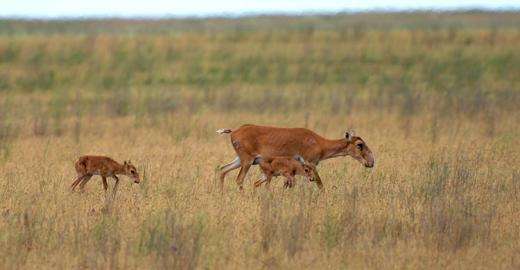
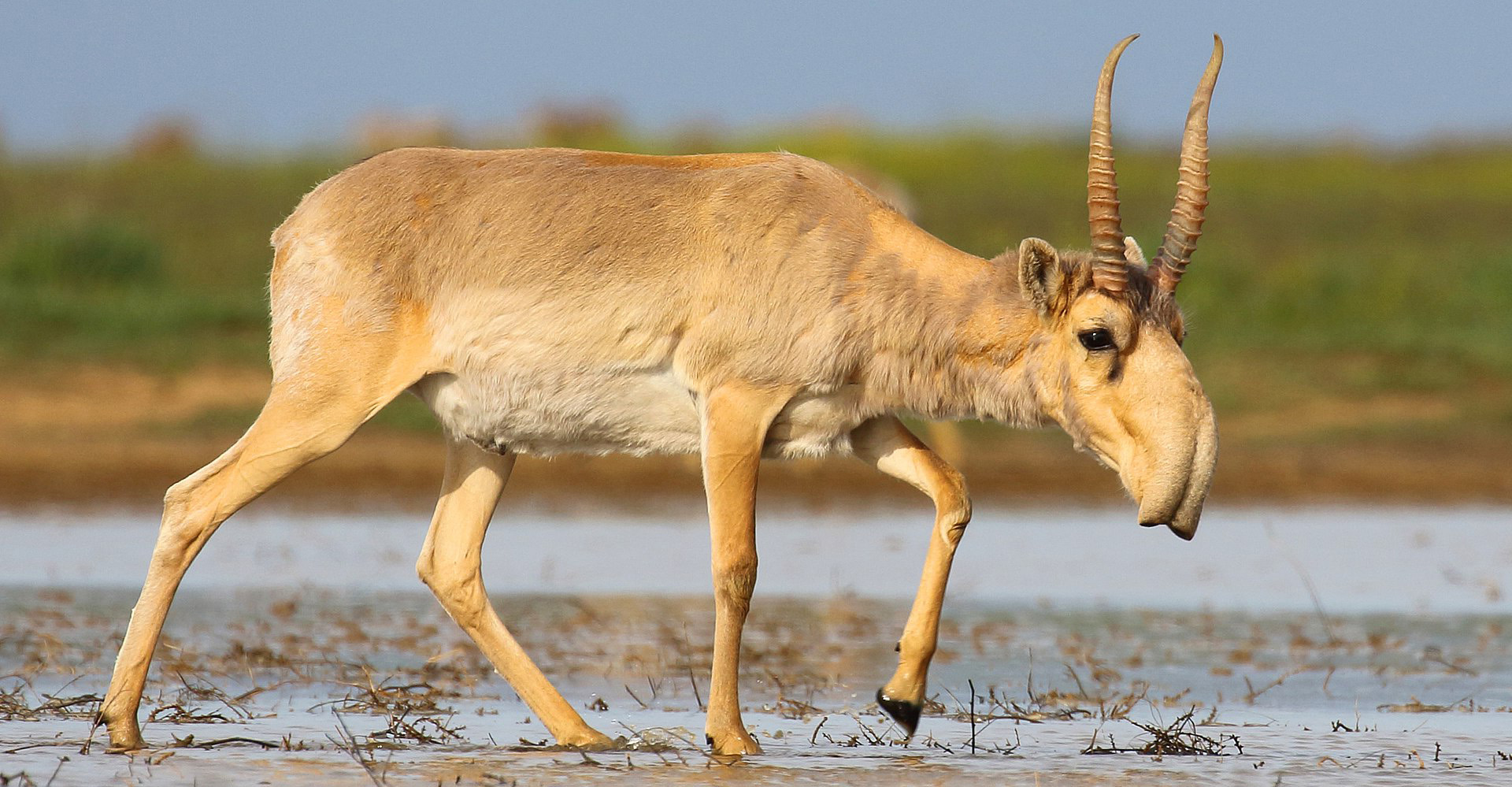
Bonn, 15 November 2022 - Wildlife trafficking is estimated to be a multi-billion-dollar business involving the unlawful harvest and trade of animals and plants. Saiga Antelopes (Saiga spp.) are critically endangered according to the IUCN Red List assessment of 2018. As shown in the Overview Report, presented at the fourth Meeting of Signatories to the Saiga MOU in September 2021, almost all Saiga populations have grown in recent years. In Kazakhstan, where currently more than 97% of Saiga tatarica live, the number of animals has surpassed its historical maximum in the Ural region in 2022. Nevertheless, the species remains vulnerable to disease outbreaks, effects of barriers to migration, and poaching. Saiga Antelopes are being poached mostly for their horns, which are destined for international illegal trade.
The Species Conservation Catalyst Fund (SCCF), a new initiative within the Combating Wildlife Trafficking (CWT) Program of the U.S. Fish and Wildlife Service (USFWS), recently awarded its first round of project funding. The SCCF aims to reduce wildlife trafficking for specific species within the complex social-ecological systems across a species’ trade chain. The SCCF focuses on those species primarily threatened by illegal trade and supports work that catalyzes significant and sustained change. The SCCF prioritizes projects that build empirical understanding around the trafficking of a species, and develop, implement, and evaluate strategic activities to reduce such trafficking. The SCCF is envisioned as a ‘conservation accelerator’ to launch or grow projects, support opportunities for skill building, and develop networks of researchers and practitioners.
USFWS recently awarded the first round of project funding for the first two trafficking issues to be addressed through the SCCF:
- The poaching of Saiga Antelope (Saiga spp.) in Central Asia and Mongolia for the international trade of its horn;
- The illegal capture of cheetah (Acinonyx jubatus) cubs from the Horn of Africa for the live pet trade occurring in the Middle East.
For Saiga Antelope, USFWS awarded five grants and one cooperative agreement for a total of $2,172,936. Projects range from 2-5 years and are located in both Saiga Range States (Kazakhstan, Mongolia and Uzbekistan) and consumer states, where markets for legal and illegal Saiga products exist (China, Japan, Malaysia, and Singapore). USFWS is maximizing internal social science staff capacity to ensure that USFWS supports robust research and behavior change work in saiga horn consumer countries - including in Japan, where this will be the first saiga-related work of its kind to be piloted. This funding will also support a cooperative agreement with the Saiga Conservation Alliance to bring together all USFWS saiga grantees in 2023 and again in 2027 to build relationships, share information, explore synergies, as well as identify and fill evidence gaps. Within this project a USFWS-specific-portfolio site will be developed within the Saiga Resource Centre website and the production of articles from USFWS-funded projects for the biannual six-language online & print newsletter, Saiga News, will be supported.
Cheetah
Cheetah