
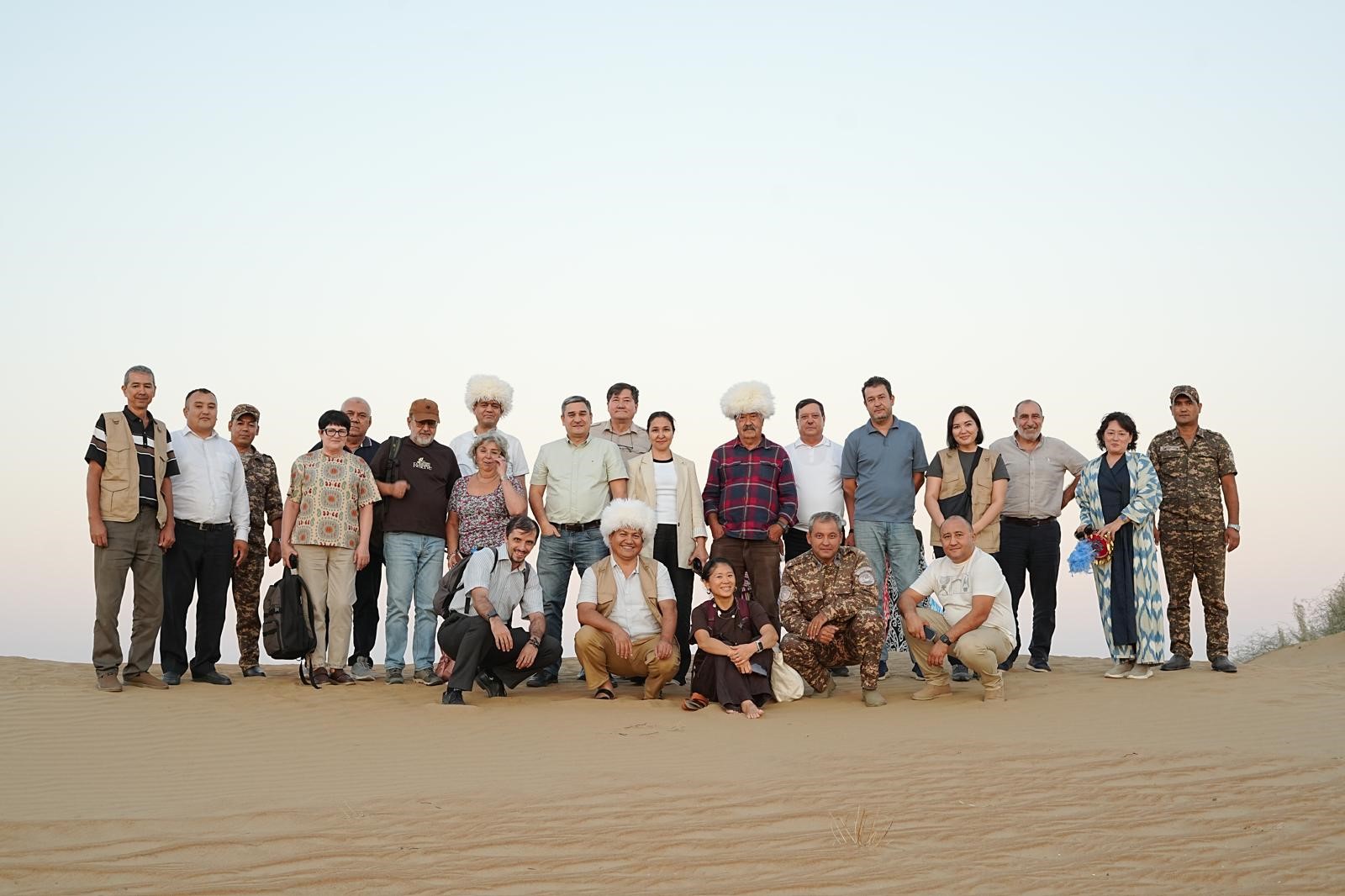
Strengthening habitat connectivity for the world’s largest Bukhara deer population
From 23–25 September 2026, the technical workshop Securing Bukhara Deer Habitat Connectivity in the Lower Amu Darya took place in Urgench, Uzbekistan, hosted by the Government of Uzbekistan. The workshop brought together representatives of the National Committee on Ecology and Climate Change of the Republic of Uzbekistan, the Ministry of Environmental Protection of Turkmenistan (online), Uzbek regional authorities, heads of protected areas, and national NGOs, including the KIVA Center and “For Nature.” International organizations were represented by CMS, UNDP, IUCN, the Michael Succow Foundation, WWF, and Conservation X Labs.
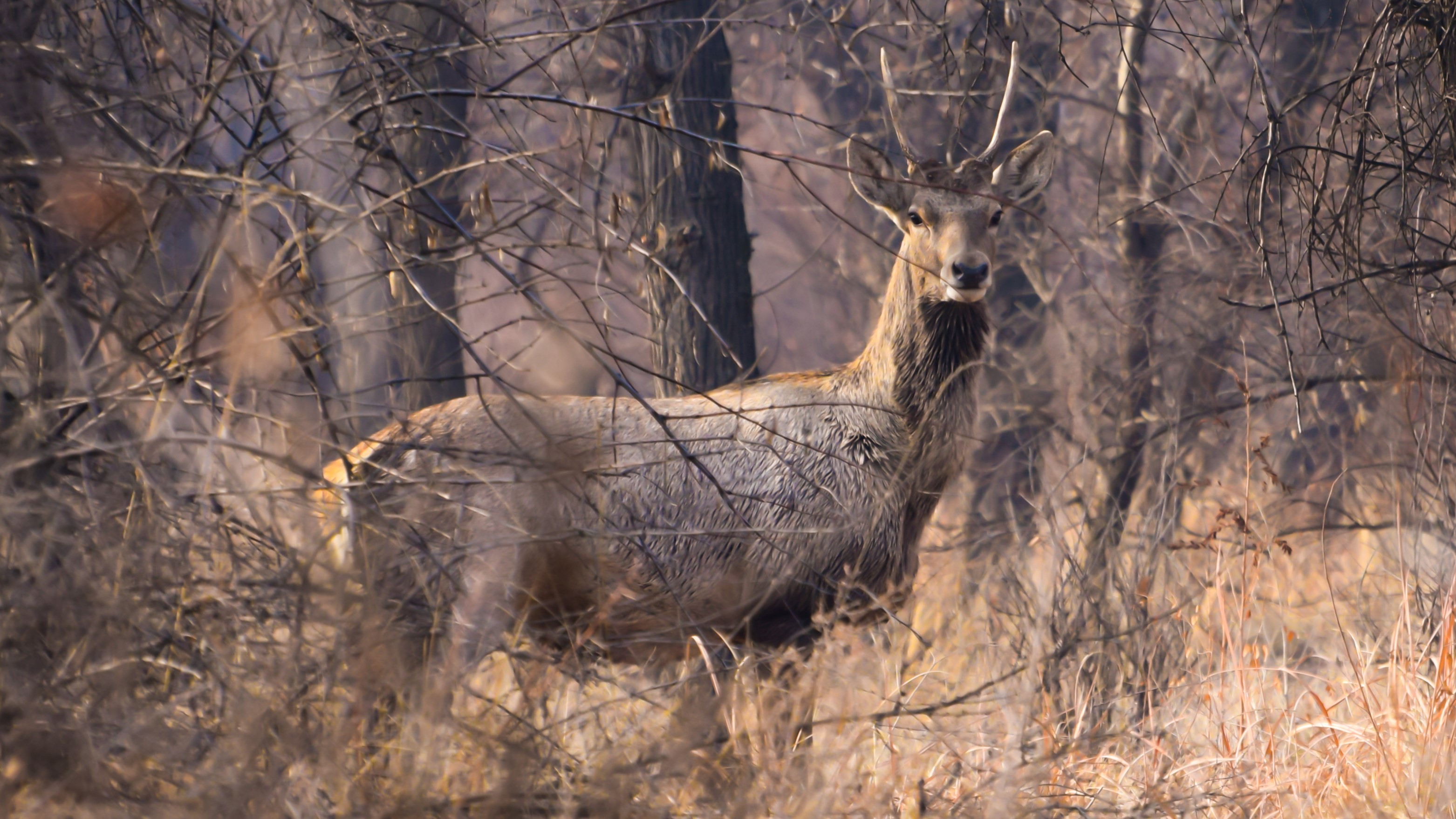
Bukhara deer (Cervus elaphus bactrianus). © Marmazinskaya
Under the technical lead of Natalya Marmazinskaya, Uzbek national Dostlik Order laureate and facilitators Mr. Khalilulla Sherimbetov of the National Committee and Gaukhar Kudaybergenova of UNDP, participants discussed threats to the world’s largest population of Bukhara deer, which occurs in the Lower Amu Darya region and faces habitat degradation and fragmentation due to anthropogenic pressures and climate change.
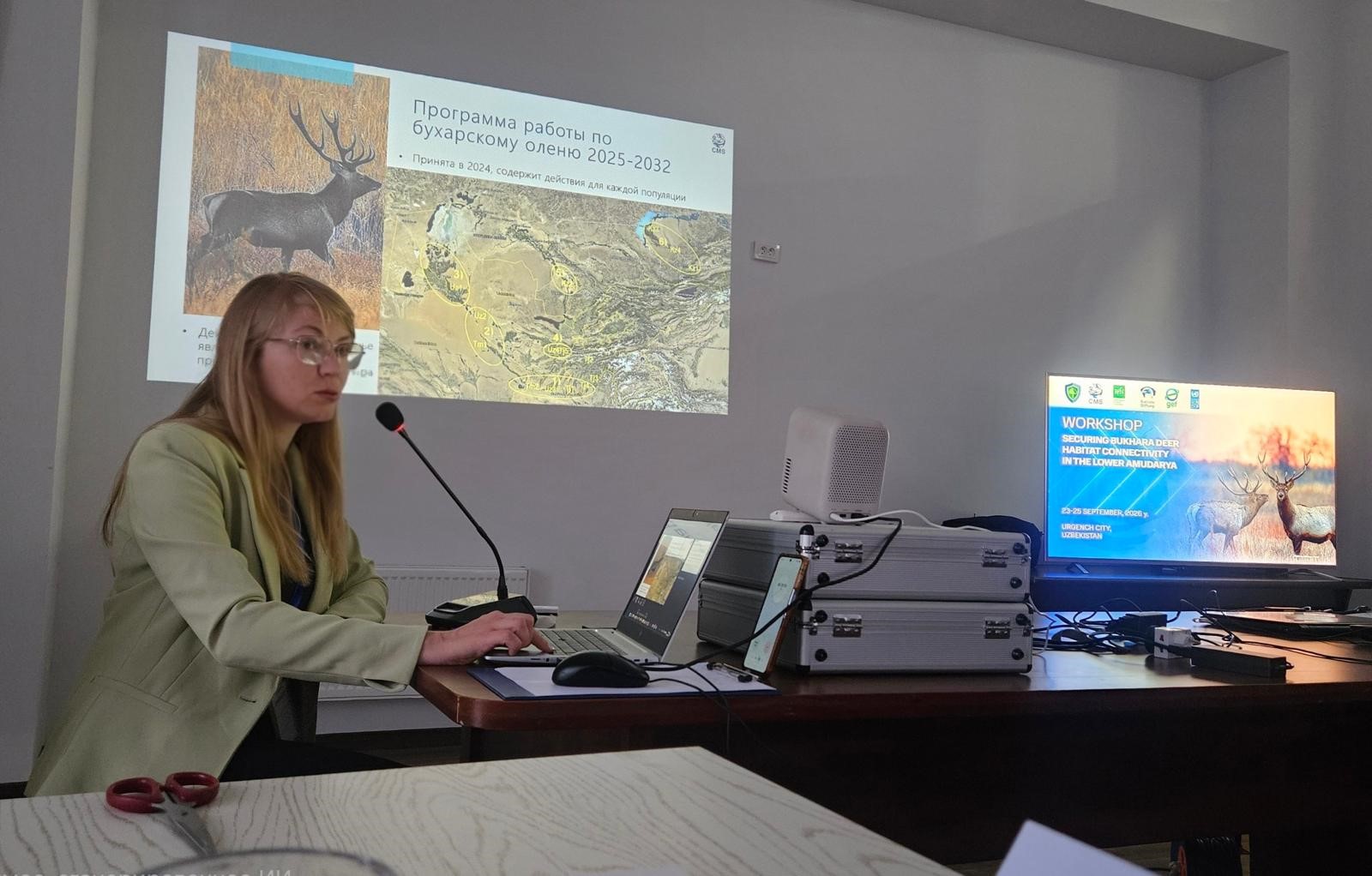
Polina Orlinskiy, CMS Associate Programme Management Officer for the Central Asian Mammals Initiative.
The participants discussed the necessary measures to restore tugai forests and ecological connectivity, as well as supply water to the protected area, establish ecological corridors, prevent poaching, translocate Bukhara deer and mitigate conflicts between farmers and deer among other topics. The results of the workshop are the Action Plan for Securing Bukhara Deer Habitat Connectivity in the Lower Amu Darya Landscape and agreed next steps to facilitate the integration of the action plan into Uzbekistan’s National Biodiversity Strategy, national and project-based funding schemes.
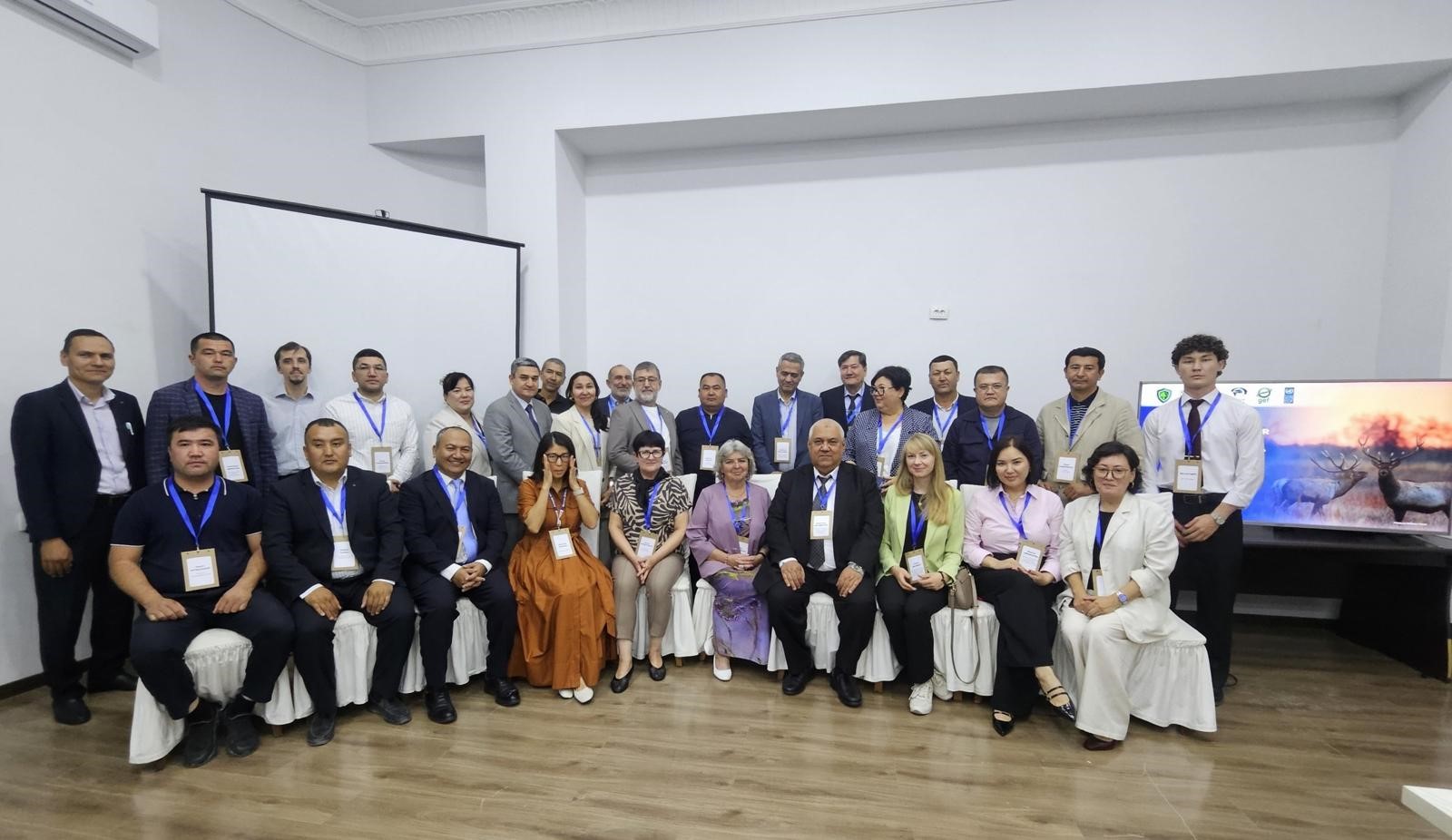
Group photo of workshop participants.
The workshop was co-organized by the CMS Secretariat, Michael Succow Foundation and the German Federal Agency for Nature Conservation (BfN). It was funded by BfN, with financial and technical support from the Aral Sea Wetlands project of the National Committee on Ecology and Climate Change of the Republic of Uzbekistan and UNDP, funded by the Global Environment Facility (GEF).
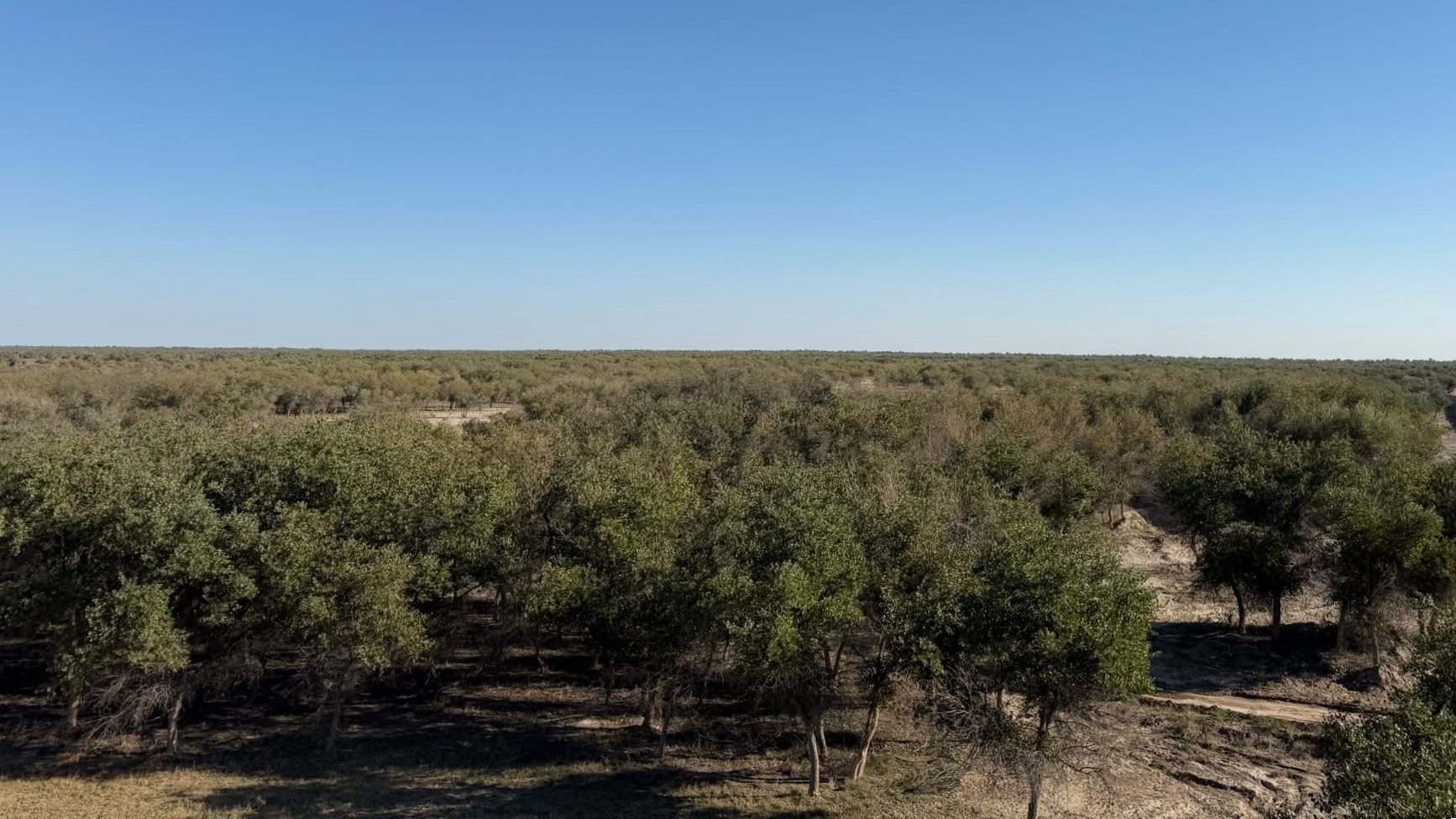
Lower Amu Darya State Biosphere Reserve in Uzbekistan